


Get a fixed-fee quote
Reviewed by Wichuda Atthamethakon, LL.M., Thai Bar Licence 3149/2556, for ThaiLawOnline, a Thai law firm acting for foreigners since 2006.
Update log
- 31 October 2026: Added the statute box with Thai, English and French text and checked the page against the official text
Every foreigner working in Thailand is legally required to hold a work permit in Bangkok. It is a document from the government. It lets a foreigner work, earn a salary, and sign up for benefits. There are exemptions, but they come from section 4 of the Emergency Decree on Managing the Work of Aliens B.E. 2560 (2017) and not from the Alien Working Act, which was repealed. Section 4 disapplies the Decree entirely for a foreigner acting in one of eight capacities: a member of a diplomatic mission; a member of a consular mission; a representative of a member state or an official of the United Nations and its specialised agencies; a personal servant who has travelled from abroad to work for one of those people; a person carrying out duties under an agreement between the Thai government and a foreign government or an international organisation; an occasional entrant organising or joining a meeting, giving an opinion, lecture or demonstration at a conference, training, study visit or seminar, or performing in arts, culture or a sporting competition, as the Cabinet prescribes; an entrant who operates a business, invests, or has high knowledge, ability or skill benefiting national development, as the Cabinet prescribes; and the representative of a foreign juristic person licensed under the law on foreign business. The embassy case people usually have in mind is the first two of those. This work permit in Bangkok is needed above and beyond a visa should you wish to work. A work permit in Bangkok is essential for those seeking employment in the city.
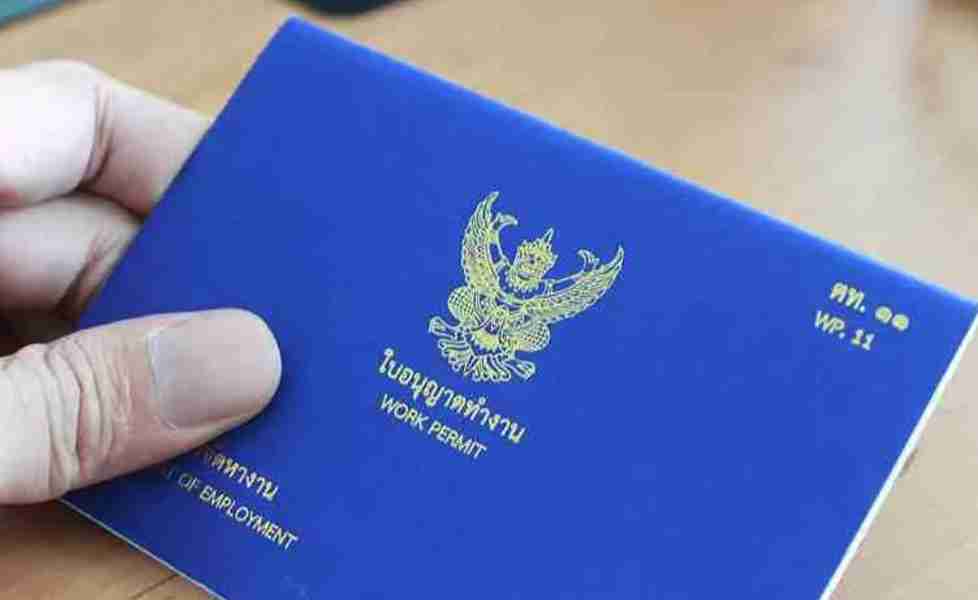
Whatever the job, and whether or not you have an employer, you need a work permit in Bangkok unless section 4 exempts you. This is required to work legally in Thailand. People might think it is easy. It is not. It is more difficult to get a work permit in Bangkok than a visa. Work permits are issued by the Department of Employment, which is part of the Ministry of Labour. Let’s explore how to obtain a work permit in Bangkok.
Table of Contents
The document photographed above is a WP 11 book, the form the Thai work permit took before 2018. It is not what a new applicant is issued today. Section 7 below sets out the four forms the law now provides, one of which is fully electronic.
1. Obtaining a Work Permit in Bangkok
Understanding the Work Permit in Bangkok
Understanding the work permit in Bangkok is crucial for every foreign worker. It outlines the rights and responsibilities of the employee in the city.
Many foreigners are unaware that obtaining a work permit in Bangkok can greatly enhance their job prospects in Thailand.
To obtain a work permit in Thailand, you normally must first hold the correct visa. Tourist visas don’t cut the mustard, if you want a work permit, you’ll need a Non-Immigrant visa in your passport. This can be a Type B visa for work. It can also be an O visa for volunteering or family reasons, like if you are married to a Thai person. In general, if you’re coming to Thailand to work, your employer will send you supporting documents to help you apply for this visa. This is important because it means that you already have an employer to act as guarantor for your work permit.
You will need an employer for your work permit in Thailand
If you already have an employer the application must name it (section 59 paragraph 2), and in practice that employer must be a registered business, organization, or institution. Most employers will assist you with the paperwork if they have hired foreigners in the past. However, if you are their first foreign employee, they may not have experience with the application process.
Most employers will help you with the paperwork if they have hired foreigners before. However, if you are their first foreign employee, they may not have experience with the application process.

In fact they may not even realize that you must hold a work permit to work for them. Some may try to delay the application or try to convince you that you don’t need a permit to work there, but do not be put off.
Does a DTV replace a work permit?
The Destination Thailand Visa is designed for workcation applicants such as digital nomads, remote workers, freelancers and foreign talent. It is a visa, not a Thai work permit.
A DTV should not be presented as permission to accept employment from a Thai employer, provide services to Thai clients or operate a Thai business. Those activities require a separate work-permit assessment before work starts.
If you work remotely for an overseas employer or overseas clients, the DTV may be the relevant immigration route. Before relying on it, identify where your employer and clients are located, who pays you, where contracts are signed and whether any part of the work is performed for a Thai business.
Read our Destination Thailand Visa requirements or contact us before beginning work where there is a Thai employer, customer or business presence.
Forbidden jobs
Do note that there are some forbidden jobs for foreigners in Thailand.
2. Coming to Thailand
If you’re coming to Thailand specifically to work then your employer can apply for the work permit on your behalf before you enter Thailand. Processing can take from a few days up to a month or more, so doing this in advance can help you save time. However, your work permit is only officially issued when you present yourself to the labour office and sign for it.
If you are the first foreign employee or starting your own company, you may need help. You might need assistance with preparing documents for your work permit. It’s important to note here that a company hiring foreigners must have a certain amount of registered capital per foreigner. It is normally 2 million Baht, half if the employee is married to a Thai. But it is 3 million under the treaty of Amity for Americans. The company must employ 4 Thais for every foreign employee. It is half if the foreigner is married to a Thai. BOI companies have special rules.
For those interested in long-term employment, securing a work permit in Bangkok is a vital step in your career journey.
The paperwork required will vary depending on the type of organization you’ll be working for and the type of work that you’ll do. It may also take several tries to get the paperwork approved in case subtle details are incorrect or omitted. In most cases, it is a good idea to hire a law office to prepare and submit your application. This is especially true if the employer does not have experience with work permits.
The law behind this page
English
Section 8 Emergency Decree on Managing the Work of Foreigners B.E. 2560
Full text
An alien is prohibited from working without a work permit, or from doing work beyond what the alien has the right to do, in violation of this Emergency Decree.
ThaiLawOnline translation
Section 59 Emergency Decree on Managing the Work of Foreigners B.E. 2560
Full text
An alien who resides in the Kingdom, or who has been permitted to enter the Kingdom temporarily under the immigration law other than for tourism or transit through the Kingdom, may do only work not prohibited to aliens by notification under Section 7 paragraph one, and must obtain a work permit. Subject to Section 60, an alien wishing to obtain a work permit under paragraph one shall file an application with the Registrar and, where the alien already has an employer, shall also state the employer's name. The application and the grant of permission under paragraphs one and two shall be in accordance with the rules, procedures and conditions prescribed in ministerial regulations, which may provide for the use of electronic means. A work permit is valid for the period requested by the applicant, but not more than 2 years from the date of issue of the work permit. The ministerial regulations under paragraph three must also prescribe a completion period from the date of receipt of the application to the date of issue of the work permit, which must not exceed 15 working days. Where the Registrar cannot issue the work permit within that period, the Minister or the Director-General shall take action against the officials concerned as the case requires. Where the failure to issue the work permit was without reasonable cause, it is deemed a disciplinary offence and disciplinary action shall follow. Subject to the law, a person permitted to work under paragraph one has the right to do every kind of work not prohibited to aliens by notification under Section 7 paragraph one.
ThaiLawOnline translation
Section 60 Emergency Decree on Managing the Work of Foreigners B.E. 2560
Full text
An alien outside the Kingdom who wishes to apply for permission to work in the Kingdom may file the application and pay the fee through an electronic system. An employer wishing to employ an alien to come to work in its business in the Kingdom may file the work permit application on behalf of the alien with the Registrar, and pay the fee on behalf of the alien. The application, the issue of the work permit and the fees under paragraphs one and two shall be in accordance with the rules, procedures and conditions prescribed in ministerial regulations.
ThaiLawOnline translation
Section 64/2 Emergency Decree on Managing the Work of Foreigners B.E. 2560
Full text
A person permitted to work has a duty to notify the Registrar of the employer, the employer's place of work and the main nature of the work done, within 15 days from the date of starting work, and must notify on every change of employer.
ThaiLawOnline translation
Section 4 Emergency Decree on Managing the Work of Foreigners B.E. 2560
Full text
This Emergency Decree does not apply to the performance of duties in the Kingdom by aliens solely in the following capacities: (1) persons in a diplomatic mission; (2) persons in a consular mission; (3) representatives of member states and staff of the United Nations and its specialised agencies; (4) personal servants who travel from abroad to work regularly with a person under (1), (2) or (3); (5) persons performing duties or missions under an agreement made by the Thai Government with a foreign government or an international organisation; (6) persons entering occasionally to organise or attend a meeting, express opinions, lecture or give demonstrations at a meeting, training, study visit or seminar, or at an artistic or cultural performance or a sports competition, or any other activity, as prescribed by the Council of Ministers; in so prescribing, the Council of Ministers may set such periods and conditions as it considers appropriate; (7) persons entering to operate a business or invest, or who have high knowledge, ability or skills, which will benefit the development of the country, as prescribed by the Council of Ministers; (8) representatives of a foreign juristic person holding a business licence under the law on foreign business operations.
ThaiLawOnline translation
Section 7 Emergency Decree on Managing the Work of Foreigners B.E. 2560
Full text
The Minister, with the approval of the Committee, may by notification prescribe any work as work prohibited to aliens, and the prohibition may be absolute or subject to any conditions. In prescribing under paragraph one, regard shall be had to national security, the employment and professional opportunities of Thai people, the promotion of Thai wisdom and identity, and the need for foreign labour necessary for the development of the country, together with the commitments or obligations of Thailand on a reciprocal basis.
ThaiLawOnline translation
Section 101 Emergency Decree on Managing the Work of Foreigners B.E. 2560
Full text
An alien who violates Section 8 is liable to a fine of 5,000 to 50,000 baht and, once the fine has been paid, shall be sent out of the Kingdom without delay, unless the alien falls under Section 63 or Section 63/1. Paragraph one does not apply to an alien who is an injured person or a witness in a human trafficking offence case under the law on the prevention and suppression of human trafficking. Where an alien accused of an offence under paragraph one consents to travel back out of the Kingdom, the inquiry official shall settle the case by fine in accordance with the rules, procedures and conditions set by the Joint Committee and then notify the Department of Employment, and once the alien has been made to travel back out of the Kingdom, the case is deemed terminated under the Criminal Procedure Code. The Joint Committee under paragraph three consists of a representative of the Office of the Attorney General as chairperson, a representative of the Royal Thai Police as member, and a representative of the Department of Employment as member and secretary. The rules, procedures and conditions for settlement by fine set by the Joint Committee under paragraph three shall take into account the gravity of the offence, repeat offending and the prevention of repeat offending, and shall be published in the Government Gazette.
ThaiLawOnline translation
Section 102 Emergency Decree on Managing the Work of Foreigners B.E. 2560
Full text
A person who takes an alien into work in violation of Section 9 is liable to a fine of 10,000 to 100,000 baht per alien employed. If the offender under paragraph one repeats the offence, the offender is liable to imprisonment for not more than 1 year, or a fine of 50,000 to 200,000 baht per alien employed, or both, and is prohibited from employing aliens for 3 years from the date of the final court judgment imposing punishment. A person living in the same family as the person who took the alien into work under paragraph one shall not be deemed guilty as principal, instigator or supporter.
ThaiLawOnline translation
ไทย
มาตรา 8 พระราชกำหนดการบริหารจัดการการทำงานของคนต่างด้าว พ.ศ. 2560
ข้อความเต็ม
ห้ามคนต่างด้าวทำงานโดยไม่มีใบอนุญาตทำงานหรือทำงานนอกเหนือจากที่มีสิทธิจะทำได้อันเป็นการฝ่าฝืนพระราชกำหนดนี้
ตรงตามข้อความในราชกิจจานุเบกษา / สำนักงานคณะกรรมการกฤษฎีกา (Verbatim from the Royal Gazette / Office of the Council of State)
มาตรา 59 พระราชกำหนดการบริหารจัดการการทำงานของคนต่างด้าว พ.ศ. 2560
ข้อความเต็ม
คนต่างด้าวซึ่งมีถิ่นที่อยู่ในราชอาณาจักรหรือได้รับอนุญาตให้เข้ามาในราชอาณาจักรเป็นการชั่วคราวตามกฎหมายว่าด้วยคนเข้าเมืองซึ่งมิใช่เพื่อการท่องเที่ยวหรือการเดินทางผ่านราชอาณาจักร จะทำงานได้ก็แต่เฉพาะงานที่มิได้มีประกาศห้ามคนต่างด้าวทำตามมาตรา ๗ วรรคหนึ่ง และต้องได้รับใบอนุญาตทำงาน ภายใต้บังคับมาตรา ๖๐ คนต่างด้าวซึ่งประสงค์จะขอรับใบอนุญาตทำงานตามวรรคหนึ่ง ให้ยื่นคำขออนุญาตต่อนายทะเบียน และในกรณีที่มีนายจ้างแล้วให้ระบุชื่อนายจ้างด้วย การขออนุญาตและการอนุญาตตามวรรคหนึ่งและวรรคสอง ให้เป็นไปตามหลักเกณฑ์ วิธีการ และเงื่อนไขที่กำหนดในกฎกระทรวง โดยจะกำหนดให้ใช้วิธีการทางอิเล็กทรอนิกส์ก็ได้ และใบอนุญาตทำงานให้มีอายุเท่าที่ผู้ขออนุญาตร้องขอ แต่ไม่เกินสองปีนับแต่วันที่ออกใบอนุญาตทำงาน ในกฎกระทรวงตามวรรคสามต้องกำหนดระยะเวลาแล้วเสร็จตั้งแต่วันที่ได้รับคำขออนุญาตจนถึงวันที่ออกใบอนุญาตทำงานไว้ด้วยซึ่งต้องไม่เกินสิบห้าวันทำการ ในกรณีที่นายทะเบียนไม่สามารถออกใบอนุญาตทำงานให้ได้ภายในกำหนดเวลา ให้รัฐมนตรีหรืออธิบดีดำเนินการกับเจ้าหน้าที่ที่เกี่ยวข้องตามควรแก่กรณี ในกรณีที่การไม่ออกใบอนุญาตทำงานนั้นเป็นไปโดยไม่มีเหตุอันสมควร ให้ถือว่าเป็นการกระทำผิดวินัย และให้มีการดำเนินการทางวินัยต่อไป ภายใต้บังคับแห่งกฎหมาย ผู้รับอนุญาตให้ทำงานตามวรรคหนึ่งมีสิทธิทำงานที่มิได้มีประกาศห้ามคนต่างด้าวทำตามมาตรา ๗ วรรคหนึ่งได้ทุกชนิด
ตรงตามข้อความในราชกิจจานุเบกษา / สำนักงานคณะกรรมการกฤษฎีกา (Verbatim from the Royal Gazette / Office of the Council of State)
มาตรา 60 พระราชกำหนดการบริหารจัดการการทำงานของคนต่างด้าว พ.ศ. 2560
ข้อความเต็ม
คนต่างด้าวซึ่งอยู่นอกราชอาณาจักรผู้ใดประสงค์จะขออนุญาตทำงานในราชอาณาจักร อาจยื่นคำขออนุญาตและชำระค่าธรรมเนียมผ่านทางระบบอิเล็กทรอนิกส์ได้ นายจ้างผู้ใดประสงค์จะจ้างคนต่างด้าวเข้ามาทำงานในกิจการของตนในราชอาณาจักร จะยื่นคำขออนุญาตทำงานแทนคนต่างด้าวต่อนายทะเบียน พร้อมทั้งชำระค่าธรรมเนียมแทนคนต่างด้าวก็ได้ การขออนุญาตและการออกใบอนุญาตทำงานและค่าธรรมเนียมตามวรรคหนึ่งและวรรคสอง ให้เป็นไปตามหลักเกณฑ์ วิธีการ และเงื่อนไขที่กำหนดในกฎกระทรวง
ตรงตามข้อความในราชกิจจานุเบกษา / สำนักงานคณะกรรมการกฤษฎีกา (Verbatim from the Royal Gazette / Office of the Council of State)
มาตรา 64/2 พระราชกำหนดการบริหารจัดการการทำงานของคนต่างด้าว พ.ศ. 2560
ข้อความเต็ม
ผู้รับอนุญาตให้ทำงานมีหน้าที่ต้องแจ้งให้นายทะเบียนทราบถึงผู้เป็นนายจ้าง สถานที่ทำงานของนายจ้าง และลักษณะงานหลักที่ทำ ทั้งนี้ ภายในสิบห้าวันนับแต่วันที่เข้าทำงาน และต้องแจ้งทุกครั้งที่เปลี่ยนนายจ้าง
ตรงตามข้อความในราชกิจจานุเบกษา / สำนักงานคณะกรรมการกฤษฎีกา (Verbatim from the Royal Gazette / Office of the Council of State)
มาตรา 4 พระราชกำหนดการบริหารจัดการการทำงานของคนต่างด้าว พ.ศ. 2560
ข้อความเต็ม
พระราชกำหนดนี้ไม่ใช้บังคับแก่การปฏิบัติหน้าที่ในราชอาณาจักรของคนต่างด้าวเฉพาะในฐานะ ดังต่อไปนี้ (๑) บุคคลในคณะผู้แทนทางทูต (๒) บุคคลในคณะผู้แทนทางกงสุล (๓) ผู้แทนของประเทศสมาชิกและพนักงานขององค์การสหประชาชาติและทบวงการชำนัญพิเศษ (๔) คนรับใช้ส่วนตัวซึ่งเดินทางจากต่างประเทศเพื่อมาทำงานประจำอยู่กับบุคคลตาม (๑) (๒) หรือ (๓) (๕) บุคคลซึ่งปฏิบัติหน้าที่หรือภารกิจตามความตกลงที่รัฐบาลไทยทำไว้กับรัฐบาลต่างประเทศหรือองค์การระหว่างประเทศ (๖) บุคคลซึ่งเข้ามาเป็นครั้งคราวเพื่อจัดหรือร่วมประชุม แสดงความคิดเห็น บรรยาย หรือสาธิตในการประชุม การอบรม ดูงาน หรือสัมมนา หรือการแสดงศิลปะ วัฒนธรรม หรือการแข่งขันกีฬา หรือกิจกรรมอื่นใด ตามที่คณะรัฐมนตรีกำหนด ในการกำหนดดังกล่าว คณะรัฐมนตรีจะกำหนดระยะเวลาและเงื่อนไขตามที่เห็นสมควรก็ได้ (๗) บุคคลซึ่งเข้ามาเพื่อประกอบการหรือลงทุนหรือเป็นผู้มีความรู้ ความสามารถหรือทักษะสูง อันจะยังประโยชน์ต่อการพัฒนาประเทศ ตามที่คณะรัฐมนตรีกำหนด (๘) ผู้แทนของนิติบุคคลต่างด้าวที่ได้รับใบอนุญาตประกอบธุรกิจตามกฎหมายว่าด้วยการประกอบธุรกิจของคนต่างด้าว
ตรงตามข้อความในราชกิจจานุเบกษา / สำนักงานคณะกรรมการกฤษฎีกา (Verbatim from the Royal Gazette / Office of the Council of State)
มาตรา 7 พระราชกำหนดการบริหารจัดการการทำงานของคนต่างด้าว พ.ศ. 2560
ข้อความเต็ม
รัฐมนตรีโดยความเห็นชอบของคณะกรรมการอาจประกาศกำหนดให้งานใดเป็นงานที่ห้ามคนต่างด้าวทำก็ได้ โดยจะห้ามเด็ดขาดหรือห้ามโดยมีเงื่อนไขอย่างใดก็ได้ การกำหนดตามวรรคหนึ่ง ให้คำนึงถึงความมั่นคงของชาติ โอกาสในการประกอบอาชีพและวิชาชีพของคนไทย การส่งเสริมภูมิปัญญาและเอกลักษณ์ไทย และความต้องการแรงงานต่างด้าวที่จำเป็นต่อการพัฒนาประเทศ รวมตลอดทั้งความผูกพันหรือพันธกรณีที่ประเทศไทยมีอยู่ในลักษณะถ้อยทีถ้อยปฏิบัติประกอบด้วย
ตรงตามข้อความในราชกิจจานุเบกษา / สำนักงานคณะกรรมการกฤษฎีกา (Verbatim from the Royal Gazette / Office of the Council of State)
มาตรา 101 พระราชกำหนดการบริหารจัดการการทำงานของคนต่างด้าว พ.ศ. 2560
ข้อความเต็ม
คนต่างด้าวผู้ใดฝ่าฝืนมาตรา ๘ ต้องระวางโทษปรับตั้งแต่ห้าพันบาทถึงห้าหมื่นบาท และเมื่อได้ชำระค่าปรับแล้ว ให้ส่งคนต่างด้าวผู้นั้นกลับออกไปนอกราชอาณาจักรโดยเร็ว เว้นแต่เป็นคนต่างด้าวตามมาตรา ๖๓ หรือมาตรา ๖๓/๑ ความในวรรคหนึ่งไม่ใช้บังคับแก่คนต่างด้าวซึ่งเป็นผู้เสียหายหรือพยานในคดีความผิดฐานค้ามนุษย์ ตามกฎหมายว่าด้วยการป้องกันและปราบปรามการค้ามนุษย์ ในกรณีที่คนต่างด้าวซึ่งถูกกล่าวหาว่ากระทำความผิดตามวรรคหนึ่ง ยินยอมเดินทางกลับออกไปนอกราชอาณาจักร ให้พนักงานสอบสวนดำเนินการเปรียบเทียบปรับตามหลักเกณฑ์ วิธีการ และเงื่อนไขที่คณะกรรมการร่วมกำหนดแล้วแจ้งให้กรมการจัดหางานทราบ และเมื่อได้ดำเนินการให้คนต่างด้าวนั้นเดินทางกลับออกไปนอกราชอาณาจักรแล้ว ให้ถือว่าคดีเลิกกันตามประมวลกฎหมายวิธีพิจารณาความอาญา คณะกรรมการร่วมตามวรรคสาม ประกอบด้วย ผู้แทนสำนักงานอัยการสูงสุดเป็นประธานกรรมการ ผู้แทนสำนักงานตำรวจแห่งชาติเป็นกรรมการ และผู้แทนกรมการจัดหางานเป็นกรรมการและเลขานุการ หลักเกณฑ์ วิธีการ และเงื่อนไขในการเปรียบเทียบปรับที่คณะกรรมการร่วมกำหนดตามวรรคสาม ให้คำนึงถึงสภาพความร้ายแรงของการกระทำความผิด การกระทำความผิดซ้ำ และการป้องกันมิให้ผู้กระทำความผิดกระทำความผิดซ้ำอีก และให้ประกาศในราชกิจจานุเบกษา
ตรงตามข้อความในราชกิจจานุเบกษา / สำนักงานคณะกรรมการกฤษฎีกา (Verbatim from the Royal Gazette / Office of the Council of State)
มาตรา 102 พระราชกำหนดการบริหารจัดการการทำงานของคนต่างด้าว พ.ศ. 2560
ข้อความเต็ม
ผู้ใดเป็นผู้รับคนต่างด้าวเข้าทำงานโดยฝ่าฝืนมาตรา ๙ ต้องระวางโทษปรับตั้งแต่หนึ่งหมื่นบาทถึงหนึ่งแสนบาทต่อคนต่างด้าวที่จ้างหนึ่งคน ถ้าผู้กระทำความผิดตามวรรคหนึ่งกระทำผิดซ้ำอีก ต้องระวางโทษจำคุกไม่เกินหนึ่งปี หรือปรับตั้งแต่ห้าหมื่นบาทถึงสองแสนบาทต่อคนต่างด้าวที่จ้างหนึ่งคน หรือทั้งจำทั้งปรับ และห้ามผู้นั้นจ้างคนต่างด้าวทำงานเป็นเวลาสามปีนับแต่วันที่ศาลมีคำพิพากษาถึงที่สุดให้ลงโทษ มิให้ถือว่าผู้ซึ่งอยู่อาศัยในครอบครัวเดียวกันกับผู้รับคนต่างด้าวเข้าทำงานตามวรรคหนึ่งมีความผิดในฐานะตัวการ ผู้ใช้ หรือผู้สนับสนุน
ตรงตามข้อความในราชกิจจานุเบกษา / สำนักงานคณะกรรมการกฤษฎีกา (Verbatim from the Royal Gazette / Office of the Council of State)
Français
Article 8 Emergency Decree on Managing the Work of Foreigners B.E. 2560
Il est interdit à l'étranger de travailler sans permis de travail ou au-delà de ce qu'il a le droit de faire, en violation du présent décret.
résumé non officiel
Article 59 Emergency Decree on Managing the Work of Foreigners B.E. 2560
Le résident ou le séjournant temporaire, hors tourisme et transit, ne peut exercer qu'un travail non interdit (article 7) et muni d'un permis, valable au plus 2 ans. La demande se dépose auprès du Registrateur; le délai de délivrance ne peut excéder 15 jours ouvrables.
résumé non officiel
Article 60 Emergency Decree on Managing the Work of Foreigners B.E. 2560
L'étranger hors du Royaume peut demander son permis et payer les frais par voie électronique. L'employeur peut déposer la demande auprès du Registrateur et payer les frais pour lui, selon les règles fixées par règlement ministériel.
résumé non officiel
Article 64/2 Emergency Decree on Managing the Work of Foreigners B.E. 2560
Le titulaire de l'autorisation de travail doit déclarer au Registrateur l'employeur, le lieu de travail et la nature principale du travail dans les 15 jours suivant l'entrée en fonction, et à chaque changement d'employeur.
résumé non officiel
Article 4 Emergency Decree on Managing the Work of Foreigners B.E. 2560
Le décret ne s'applique pas aux étrangers exerçant uniquement comme membres de missions diplomatiques ou consulaires, représentants d'États membres, agents de l'ONU et institutions spécialisées, leurs domestiques, personnes sous accord international, intervenants occasionnels, investisseurs ou talents désignés par le Conseil des ministres, représentants de personnes morales étrangères autorisées par licence.
résumé non officiel
Article 7 Emergency Decree on Managing the Work of Foreigners B.E. 2560
Le ministre, avec l'accord du Comité, peut interdire aux étrangers tout travail, absolument ou sous conditions, en tenant compte notamment de la sécurité nationale, des débouchés des Thaïlandais, de l'identité thaïe, des besoins de main-d'œuvre étrangère et des engagements réciproques de la Thaïlande.
résumé non officiel
Article 101 Emergency Decree on Managing the Work of Foreigners B.E. 2560
L'étranger contrevenant à l'article 8 encourt 5 000 à 50 000 bahts d'amende puis, sauf articles 63 et 63/1, le renvoi rapide. Ce régime ne s'applique pas aux victimes ou témoins de traite. S'il accepte de repartir, l'amende est transigée et l'affaire est éteinte après son départ.
résumé non officiel
Article 102 Emergency Decree on Managing the Work of Foreigners B.E. 2560
Employer un étranger en violation de l'article 9: 10 000 à 100 000 bahts par étranger; en récidive, 1 an de prison au plus et/ou 50 000 à 200 000 bahts par étranger, et 3 ans d'interdiction d'en employer. La famille cohabitant avec l'employeur n'est pas réputée coupable.
résumé non officiel
Sources
- Emergency Decree on Managing the Work of Foreigners B.E. 2560, retrieved 31 October 2026
3. A medical report is needed for a work permit
One more thing that you’ll need is a health check. You can visit any public hospital in Thailand to check your general health. This includes your heart, blood pressure, and chronic diseases. You will receive a report that you need for your work permit application. This generally takes less than an hour varies a lot from a place to another, from 100 baht to maybe 800 baht. Here’s a copy of the medical report from 2024 click here. Few years ago, the same form had 5 diseases. Be sure that your form is updated.
Applying for a work permit in Bangkok typically involves several important documents that must be submitted to the Department of Employment office.
When your application is ready, take it to the Department of Employment in your province or region. This department is part of the Ministry of Labour. Once submitted, it can take up to 6 weeks to process your application. Once your permit is ready you go to the office to pay and sign for it. What you are handed depends on which of the four statutory forms that office issues: the paper forms บต.๓ and บต.๔, which the Department itself writes as WP.3 and WP.4 in English, are still among them, and so is the fully electronic permit บต.๗. Keep the permit, or the means of producing it, with you or at your workplace while you are working.
If your visa is only valid for few weeks, you may not be granted a long period, probably only until your visa runs out. Work permits used to run for a maximum of one year. Section 59 paragraph 3 of the Emergency Decree now allows a permit to be issued for as long as the applicant asks for, up to a maximum of two years from the date of issue, and paragraph 4 requires the ministerial regulation to fix a decision deadline of no more than fifteen working days.
4. List of Necessary Documents
** Please do verify because documents are constantly changing. This is just a guideline to help you.
a) Passport with valid Non-Immigrant visa
b) Copy of passport with all pages signed by applicant (including your TDAC confirmation, which replaced the paper TM.6 departure card on 1 May 2025)
c) 3 photos of the applicant, bigger than passport but same style, 5 cm X 6 cm
d) Medical certificate (There is special form to fill with 6 diseases mentioned, see this link)
e) Resume showing relevant experience and/or education. This must be translated into Thai.
f) Copy of degree and transcripts or professional certificates for jobs that require these (ex. TEFL or TESOL certificate for teaching English). They must be translated into Thai.
g) Marriage certificate if married to Thai national (this halves the hiring company’s obligation to register capital)
h) When applying for a company, the company will have to submit tax documents, VAT registration, registration documents, audit reports, list of foreigners working for the company, etc. The list is quite long.
5. Work Permits and Visas, An Intricate Dance
As a foreigner working in Thailand on temporary permission, you need to have a visa and a work permit. Issued by two different ministries, these two documents are related in a frustrating and inefficient way:
With the right documentation, securing a work permit in Bangkok can be a straightforward process.
1. Get Your Visa. To apply for a work permit from inside Thailand, you need to have a visa first; an application from outside Thailand is made under section 60. Initially, your Non-Immigrant visa will be issued for only 90 days. You can get your visa from the Thai government at a Thai embassy or consulate.
2. Get Your Work Permit. Section 59 paragraph 3 lets you ask for up to two years, but offices commonly tie the permit to your visa, so expect it to run only until the date that your visa is set to expire.
Ensure that your work permit in Bangkok is always current to avoid complications with your employment.
When you extend your contract, remember to also extend your work permit in Bangkok for continued employment.
3. Extend Your Visa. Roughly one month before your visa’s expiry date, you can apply to extend your visa up to a year. So if you have 90 days first, they will grant you another 275 days to add up to 365). You need to hold a valid work permit in order to extend your visa based on working extension. Do note that BOI work permits are different, faster and easier to get. They offer a one-stop service for smart visas, LTR visas, and work permits. These services are under a company approved by the BOI, which stands for the Board of Investment in Thailand.
4. Extend Your Work Permit. Once you get your visa extension, you can go back to the work permit office. There, you can extend your work permit for another 275 days or until your visa expires. This also requires an extra fee.
A valid work permit in Bangkok serves as documentation of your legal employment status while residing in Thailand.
It is crucial for your work permit in Bangkok to be kept up to date as it affects your employment opportunities.
6. Extension every year or two years
Failing to renew your work permit in Bangkok can lead to significant legal issues while living in Thailand.
Now you’re set for your first year. Every subsequent year, you can apply to extend your visa for one more year. Once that extension is granted, you can extend your work permit for another year or two. A permit can be issued for one year or for the two year maximum. The fee is not set by the Decree itself: the Decree fixes only a ceiling, 20,000 baht for a work permit in its annexed schedule, and a ministerial regulation sets the amount actually charged, which is far below that and scales with the period covered. It has commonly been 3,000 baht for one year and 6,000 for two, but check the figure with the office handling your file rather than budgeting from a web page. This is very convenient if you are planning to work for longer than 1 year in Thailand. You can get an extension every 2 years, even though your visa will still need renewal each year.
7. What’s In The Work Permit?
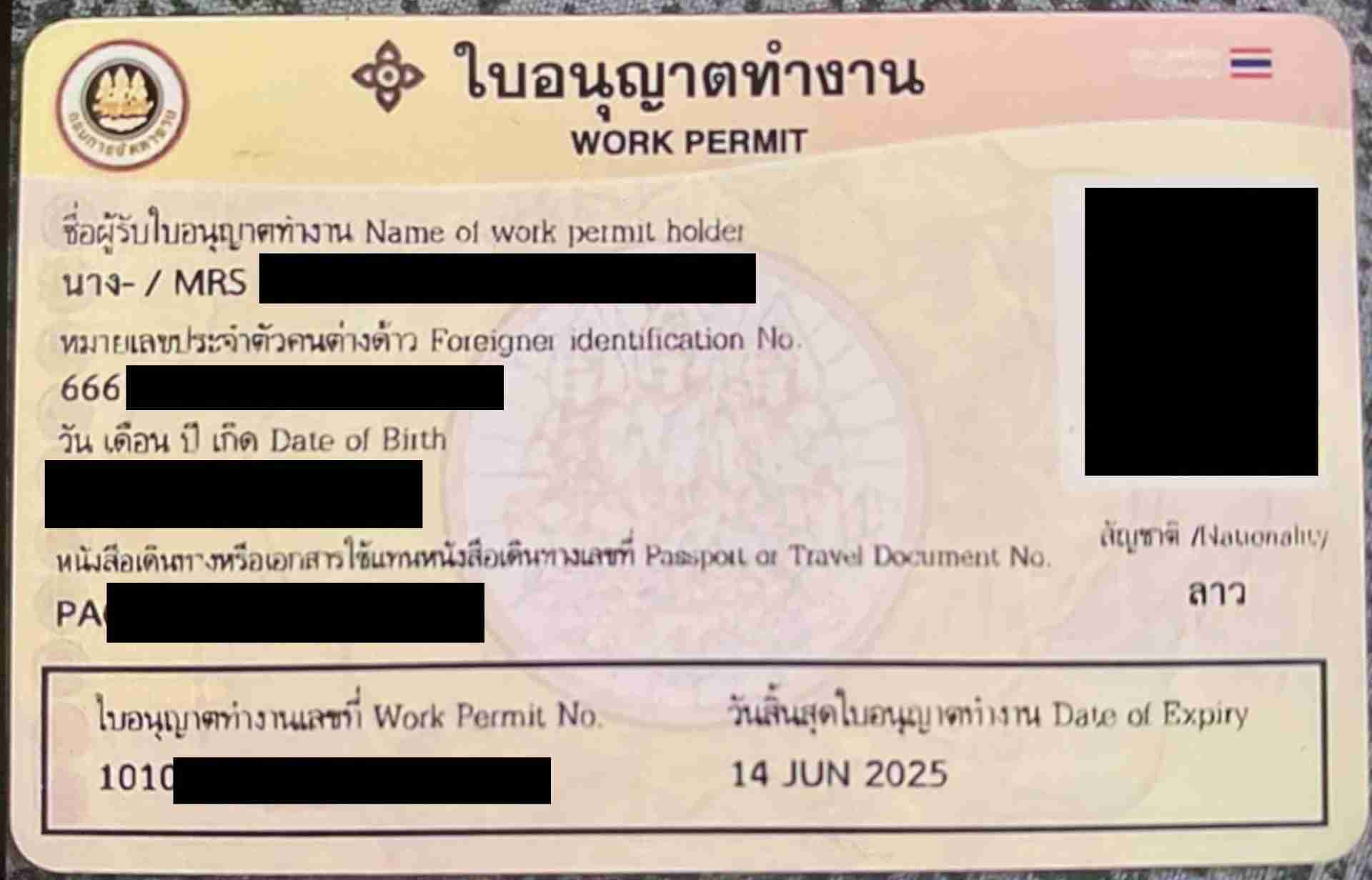
Each work permit carries a unique number issued by the registrar for the province where you work, an official of the Department of Employment. The permit shows your photograph, name, date of birth, nationality, address and signature.
Is it still a blue book? Not necessarily, and the book has no basis in the Act at all. The word สมุด, book, does not appear once in the Emergency Decree on Managing the Work of Aliens B.E. 2560. The Decree is deliberately silent on physical form: section 59 paragraph 3 leaves application and issuance to a ministerial regulation and says in terms that the regulation may prescribe the use of electronic means, and section 60 lets an applicant outside Thailand apply and pay through the electronic system.
What the form actually is comes from a separate instrument, the Department of Employment announcement prescribing the form of the work permit of 19 September 2017 (Government Gazette vol. 134, special part 232 Ngor, p. 14), as amended by announcement No. 2 of 21 March 2018 (vol. 135, special part 80 Ngor, p. 1, retroactive to 5 February 2018). Its clause 3 provides four kinds of work permit: not computer-issued (บต.๓, บต.๔); computer-issued (บต.๓, บต.๔, บต.๕, บต.๕/๑); a multi-purpose computer-issued permit (บต.๖); and an electronic work permit (บต.๗). Kinds one to three commenced on 1 April 2018.
Two things follow, and they answer the question most people are really asking. First, WP is the Department’s own English for the บต. series: the annex prints its forms bilingually, แบบ บต.๕ FORM WP.5. Second, clause 8 names what the บต. series replaced, the ตท.๑๑ series under the Ministerial Regulation B.E. 2554, so WP 11 is the pre-2018 permit, the classic blue book, and has not been the form of new issuance since 1 April 2018. Clause 9 keeps permits issued earlier valid until they expire or are revoked, which is why blue books are still in circulation and still perfectly good.
What we will not tell you is which of the four you personally will receive at a given office on a given day. All four are lawful, the announcement makes none of them the default, and that is a matter of the office’s practice rather than of law. Anyone who promises you a particular artefact is guessing.
Don’t forget that to maintain your legal status, you must have a valid work permit in Bangkok at all times.
Your work permit can serve as official proof of your address in Thailand. This is helpful for many things, like buying a car or applying for a driver’s license in Thailand.
Whatever the form, the permit records what you gave in the application, including your position and job description, and it carries a field reading ‘Locality permitted to work (Province)’. That is the province where you may legally work.
Understanding the requirements for a work permit in Bangkok helps in preparing your application effectively.
The book form of the permit closes with six warnings setting out the rules and the punishment for breaking each. They are reproduced on pages 18 and 19 of the Department of Employment’s own handbook, available here when the Department’s server is up.
8. Making Changes to Your Work Permit in Thailand
What do you do with your work permit if you want to change jobs or employers? Changes to details in the work permit (position, job description, working locations, address, etc.) are possible. You must do them in person at the Department of Employment office. It cost about 1000 THB per change.
Changing employers is more involved, but still relatively simple process. If you have a one-year contract, you can sign with a new employer next year. Your new employer can prepare the necessary documents. These documents will help guarantee your work permit, just like the initial ones. This will include a new contract for your new job and we suggest to make a 2 years contract. You can take the documents to the Department of Employment and request to extend your work permit. There is a fee of 3000THB per year. We suggest you to extend for 2 years as it avoids the same work but double the length.
It is possible to have more than 1 job description in a work permit. You can even have 2 different job descriptions in 2 different provinces of Thailand. (I know, it happened to me!)
Your work permit is your official proof of address and evidence of your status as a worker in Thailand. Working without one breaches section 8 of the Emergency Decree. Section 101, as replaced by the No. 2 Emergency Decree B.E. 2561, penalises the foreigner with a fine of 5,000 to 50,000 baht and removal from the Kingdom once the fine is paid; it carries no prison sentence, and the five year term still quoted on many websites is the original 2017 wording, replaced in 2018. Your employer is exposed more heavily: section 102 puts 10,000 to 100,000 baht on whoever takes on a foreigner without a permit, for each foreigner, rising on a repeat offence to up to a year in prison, 50,000 to 200,000 baht per head, or both, with a three year bar on employing foreigners at all.
9. Work Permits for Burmese, Laotian and Cambodian
Do note that there are agreements for people of Burma (Myanmar), Laos and Cambodia in Thailand. They have special rules and their salaries can be lower. Here’s an example of a work permit from a Laotian girl. We protected her identify.
Frequently Asked Questions
Do I need a work permit to work in Bangkok?
A foreigner working for a Thai employer or Thai business normally needs work authorization before starting, unless a specific legal exemption applies. Your visa and work permit perform different functions. A Non-B, Non-O or DTV should never be treated as automatic permission to perform any kind of work.
How do I apply for a work permit in Bangkok?
You apply to the registrar at the Department of Employment, or your employer may file and pay for you, including before you enter Thailand, submitting the company’s and your personal documents.
What documents are needed for a Bangkok work permit?
Typically your passport and Non-B visa, the company’s registration and financial documents, an employment contract, photographs and a medical certificate.
Can I work for more than one employer on a single work permit?
Section 59 paragraph 5 of the Emergency Decree lets a permit holder do any work not prohibited under section 7, subject to other law, so the Decree does not itself tie the permit to one employer. You must tell the registrar your employer, workplace and main work within 15 days of starting, and again each time you change employer (section 64/2). Check whether your permit carries any condition before relying on this.
What happens if I work in Bangkok without a permit?
Section 101 of the Emergency Decree fines the foreigner 5,000 to 50,000 baht and sends them out of the Kingdom once the fine is paid. There is no prison sentence for the worker. The employer faces 10,000 to 100,000 baht for each foreigner under section 102.
Can I work remotely from Thailand on a DTV without a work permit?
The DTV was created for workcation applicants, including remote workers and freelancers, but it is not itself a work permit. Remote work for an overseas employer or overseas clients is different from employment by a Thai company or providing services within the Thai market. If the work involves a Thai employer, Thai client, Thai business or local operational duties, obtain an individual assessment before starting.
Last reviewed: 6 September 2026. The legal statements on this page were read against the primary instruments in Thai. Specifically: the Emergency Decree on Managing the Work of Aliens B.E. 2560 as consolidated, sections 4, 5, 8, 9, 59, 60, 101 and 102 and its annexed schedule of fee ceilings; and the Department of Employment announcement prescribing the form of the work permit of 19 September 2017 as amended in 2018, clauses 1, 3, 8 and 9, which is the instrument that actually decides what the document is. The section headed What’s In The Work Permit? was rewritten: the page had said the permit is a blue book, and the word for book does not appear anywhere in the Decree, while the announcement provides four lawful forms of which one is fully electronic. The page had also given the same document two different form numbers, WP 11 in an image caption and WP4 in the process section; WP 11 is the pre-2018 form and has not been issued to new applicants since 1 April 2018. A penalty statement was corrected because acting on it would have misled a reader about their own exposure: working without a permit carries a fine of 5,000 to 50,000 baht and removal from the Kingdom under section 101 as replaced in 2018, not a prison term, and the heavier 10,000 to 100,000 baht per head falls on the employer under section 102. What was not checked, so that this line does not claim more than it should: the work permit fee figures and the registered capital and Thai employee ratios are Department of Employment requirements set below the Decree, and the current fee regulation was not available to us at the time of review, so those numbers are left as found and are not certified here.
Ready to get a fixed fee for this?
Tell us what you need. A licensed Thai lawyer reads it and replies with a fixed fee, not an hourly estimate.
Thai Law Updates, free by email
Plain-English updates on Thai law changes that affect foreigners: property, visas, marriage, business and wills. One short email a month from a firm practicing since 2006. No spam, unsubscribe anytime.